
In this study, the authors conduct a survey of high school students to evaluate the effects of screen time and habits on motivation.
Read More...Examining the relationship between screen time and achievement motivation in an adolescent population
In this study, the authors conduct a survey of high school students to evaluate the effects of screen time and habits on motivation.
Read More...Exercise, grades, stress, and learning experiences during remote learning due to the COVID-19 pandemic

In this study, the authors survey middle and high school students in different states in the U.S. to evaluate stress levels, learning experiences, and activity levels during the COVID-19 pandemic.
Read More...Comparison of Perception of 2020 Election Security Threats Between Young and Old Voters
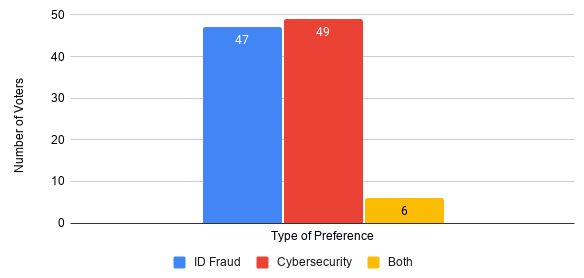
In this study, results from an extensive survey report college students' and senior citizens' voting concerns during the 2020 presidential election.
Read More...An Experiment to Assess the Usefulness of a Virtual Environment as a Method of Public Speaking Anxiety Exposure

This experiment assessed the effectiveness of a virtual environment as a method of exposure in the treatment of high school students’ public speaking anxiety. The results show that participants’ heartbeat was higher when they wore a VR headset than when they did not.
Read More...Young People Drinking: The Effect of Group Size on Drinking Habits
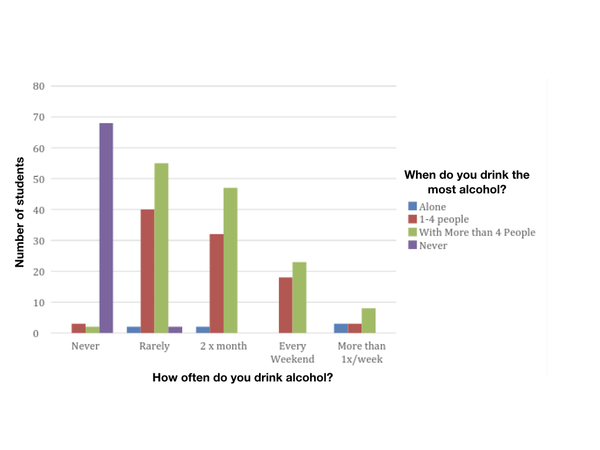
Palermo et al. examined the effect of group size on drinking habits of college and high school students. The authors found that both high school and college students tended to consume the most alcohol in group sizes of 4 or more, independent of how frequently they drink. They also found that the proportion of college students that drink is nearly twice the proportion of high school students that drink. This study supports previous findings that underage drinking happens in large groups and suggests that effective intervention in underage drinking would be at the group level.
Read More...Does Gaming Improve Cognitive Skills?
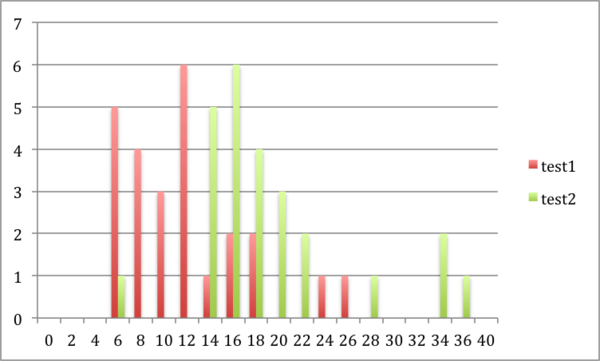
Playing video games may improve mental performance by encouraging practicing logical reasoning skills. Students who played video games in between two tests tended to perform better on the second test than those that did not play video games.
Read More...Using machine learning to detect outliers of red clump stars
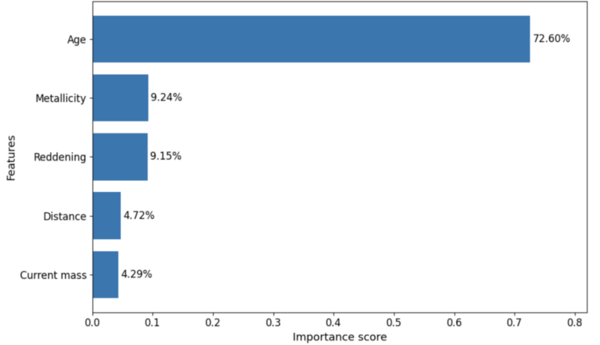
Machine learning offers a powerful way to analyze large astronomical datasets and identify stars with unusual properties. In this study, students used Extreme Gradient Boosting and Isolation Forest models to investigate why some red clump stars deviate from their expected luminosities. Their results show that stellar age plays a much stronger role than metallicity in driving luminosity variation, and the models successfully detected outlier stars that may affect distance measurements in galactic studies.
Read More...Mitigation of ultraviolet solar radiation involving calcite
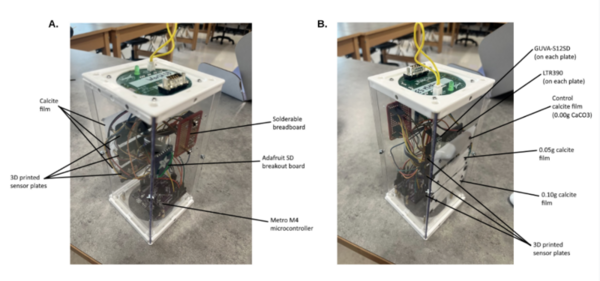
This study tested whether calcite, a safe and naturally occurring mineral, can block ultraviolet (UV) radiation when used in solar geoengineering. Students launched a high‑altitude balloon carrying UV sensors and calcite‑coated sheets to measure how much UV light passed through different calcite concentrations. Their results showed that calcite significantly reduces UV transmission, suggesting it may be a promising material for future stratospheric aerosol injection to help mitigate climate change.
Read More...Study of PINN sensor layout in evaluating WSS with application to patient-specific carotid flow
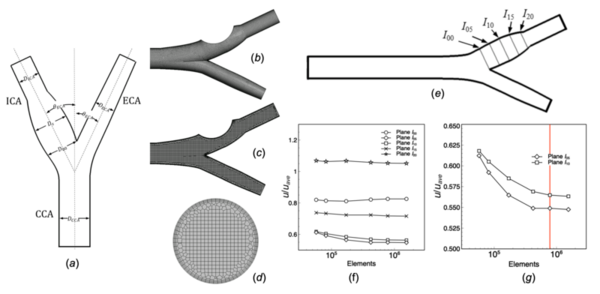
Physics‑Informed Neural Networks (PINNs) offer a promising way to estimate blood‑flow behavior in arteries, especially near the vessel wall where traditional methods struggle. In this study, students tested how sensor density and placement affect PINN accuracy in modeling carotid artery flow and found that accuracy improves up to a moderate sensor density and depends strongly on how close sensors are placed to the arterial wall. Applying the optimized configuration to a patient‑specific carotid model produced velocity predictions closely matching computational fluid dynamics results, highlighting PINNs’ potential for future personalized cardiovascular assessment.
Read More...Performance comparison of indoor polyculture utilizing hydroponic and soil-based systems
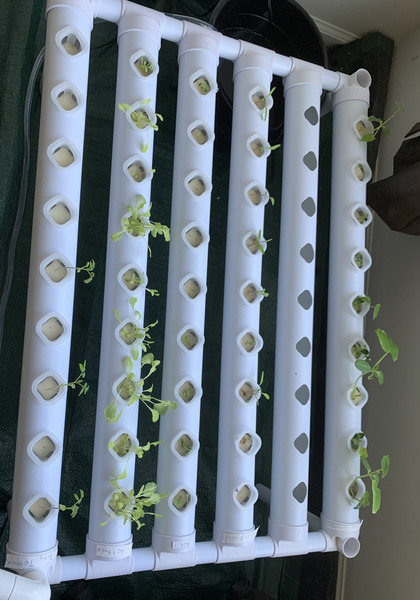
Hydroponics is often promoted as a highly efficient alternative to traditional soil farming, but its effectiveness in small indoor polyculture systems is not well understood. In this study, students compared plant growth and maturity across hydroponic and soil-based indoor polycultures and found that soil grown plants were generally taller and more mature than those grown hydroponically. These results suggest that soil-based methods may outperform hydroponics in certain household polyculture settings.
Read More...