Browse Articles

Comparative Gamma Radiation Analysis by Geographic Region

Zadan et al. | Jul 20, 2015

Comparative Gamma Radiation Analysis by Geographic Region

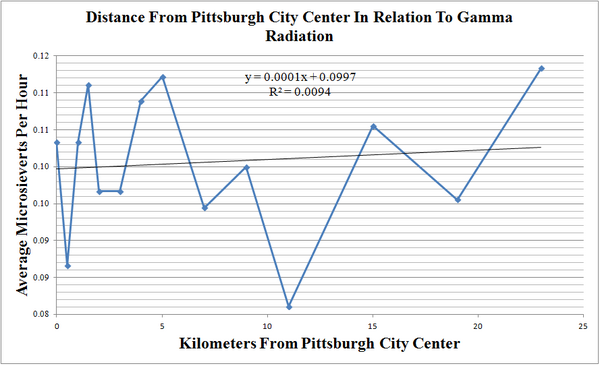
Gamma radiation can be produced by both natural and man-made sources and abnormally high exposure levels could lead to an increase in cell damage. In this study, gamma radiation was measured at different locations and any correlation with various geographic factors, such as distance from a city center, elevation and proximity to the nearest nuclear reactor, was determined.

Read More...
Identification of a Free Radical Scavenger as an Additive for Lung Transplant Preservation Solution to Inhibit Coagulative Necrosis and Extend Organ Preservation

Ganesh et al. | Feb 12, 2015

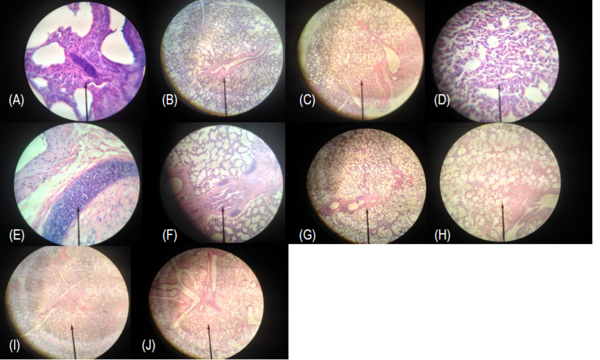
Identification of a Free Radical Scavenger as an Additive for Lung Transplant Preservation Solution to Inhibit Coagulative Necrosis and Extend Organ Preservation

During transfer of organs from a donor to a patient, the organs deteriorate in part due to damage by free radicals. Application of antioxidant solutions could extend organ preservation times. The authors found that vitamin E and butylated hydroxytoluene seemed to be most effective in arresting cell damage of a bovine lung.

Read More...

The Prevalence of White Guilt Among American High School Students

Buadu et al. | Jun 03, 2014

The Prevalence of White Guilt Among American High School Students

Racial inequality has been a major issue throughout the history of the United States. In recent years, however, especially with the election of America's first black president, many have claimed that we have made progress and are moving towards a post-racial society. The authors of this study sought to test that claim by evaluating whether high school age students still experience a phenomenon known as white guilt. White guilt is defined as remorse or shame felt by people of Caucasian descent about racial inequality.

Read More...

The Effect of UV Treatment on the Degradation of Compostable Polylactic Acid

Zhang et al. | Nov 28, 2013

The Effect of UV Treatment on the Degradation of Compostable Polylactic Acid

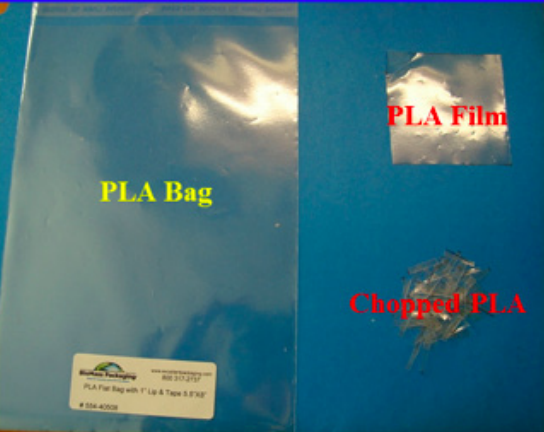
Polylactic acid (PLA) is a bio-based, compostable plastic that is comparable in cost to petroleum-based plastics. This study aims to evaluate the effects of UV treatment and mechanical chopping on the degradation of PLA. Based on their findings, the authors propose an alternative PLA degradation process that may be more time and energy efficient than current processes.

Read More...

The effect of pH levels on the growth rate of diatoms

Shao et al. | Oct 14, 2026

The effect of pH levels on the growth rate of diatoms
Image credit: Cristian Palmer

Here the authors investigated how climate change-induced ocean acidification may impact harmful micro algae such as diatoms that produce large amounts of oxygen in the atmosphere and serve as important food sources for other marine organisms. They evaluated diatom growth rates at current seawater pH levels (8.1) alongside reduced pH levels (7.5 and 6.8). The findings indicate that while diatoms maintain steady growth under moderate acidification (pH 7.5), severe acidification down to pH 6.8 significantly limits their ability to adapt and thrive.

Read More...

Using machine learning to detect outliers of red clump stars

Meng et al. | Oct 10, 2026

Using machine learning to detect outliers of red clump stars

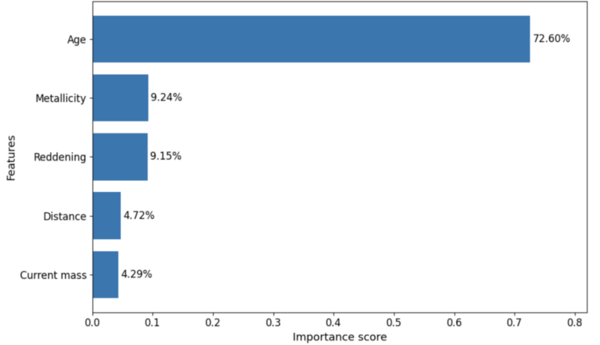
Machine learning offers a powerful way to analyze large astronomical datasets and identify stars with unusual properties. In this study, students used Extreme Gradient Boosting and Isolation Forest models to investigate why some red clump stars deviate from their expected luminosities. Their results show that stellar age plays a much stronger role than metallicity in driving luminosity variation, and the models successfully detected outlier stars that may affect distance measurements in galactic studies.

Read More...

Mitigation of ultraviolet solar radiation involving calcite

Nare et al. | Oct 10, 2026

Mitigation of ultraviolet solar radiation involving calcite

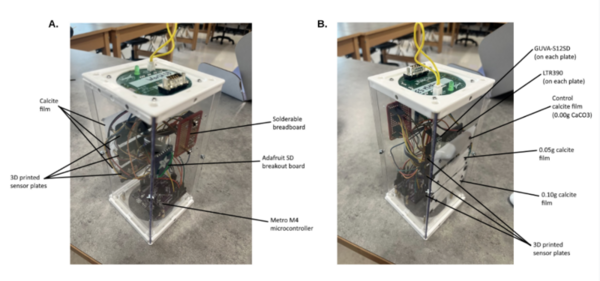
This study tested whether calcite, a safe and naturally occurring mineral, can block ultraviolet (UV) radiation when used in solar geoengineering. Students launched a high‑altitude balloon carrying UV sensors and calcite‑coated sheets to measure how much UV light passed through different calcite concentrations. Their results showed that calcite significantly reduces UV transmission, suggesting it may be a promising material for future stratospheric aerosol injection to help mitigate climate change.

Read More...