Browse Articles

Characterization of Drought Tolerance in Arabidopsis Mutant fry1-6

Kim et al. | Jan 07, 2019

Characterization of Drought Tolerance in Arabidopsis Mutant  fry1-6

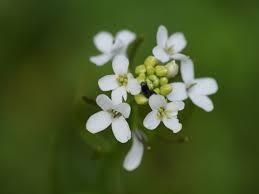
In a world where water shortage is becoming an increasing concern, and where population increase seems inevitable, food shortage is an overwhelming concern for many. In this paper, the authors aim to characterize a drought-resistant strain of A. thaliana, investigating the cause for its water resistance. These and similar studies help us learn how plants could be engineered to improve their ability to flourish in a changing climate.

Read More...
FRUGGIE – A Board Game to Combat Obesity by Promoting Healthy Eating Habits in Young Children

Huprikar et al. | Jun 13, 2018

FRUGGIE – A Board Game to Combat Obesity by Promoting Healthy Eating Habits in Young Children

The authors created a board game to teach young children about healthy eating habits to see whether an interactive and family-oriented method would be effective at introducing and maintaining a love for fruits and veggies. Results showed that children developed a liking for fruits and vegetables, and none regressed. Half maintained their level of enjoyment for fruits and vegetables during the research period, while the other half had a positive increase. The results show that a simple interactive game can shape how young children relate to food and encourage them to maintain healthy habits.

Read More...

Young People Drinking: The Effect of Group Size on Drinking Habits

Palermo et al. | May 10, 2018

Young People Drinking: The Effect of Group Size on Drinking Habits

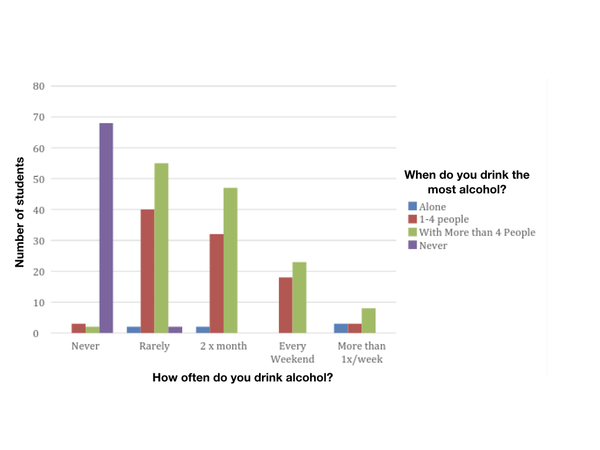
Palermo et al. examined the effect of group size on drinking habits of college and high school students. The authors found that both high school and college students tended to consume the most alcohol in group sizes of 4 or more, independent of how frequently they drink. They also found that the proportion of college students that drink is nearly twice the proportion of high school students that drink. This study supports previous findings that underage drinking happens in large groups and suggests that effective intervention in underage drinking would be at the group level.

Read More...

Estimating Paleoenvironments Utilizing Foraminiferal Fossils from the Toyohama Formation, Aichi Prefecture, Central Japan

Kimitsuki et al. | Dec 11, 2017

Estimating Paleoenvironments Utilizing Foraminiferal Fossils from the Toyohama Formation, Aichi Prefecture, Central Japan

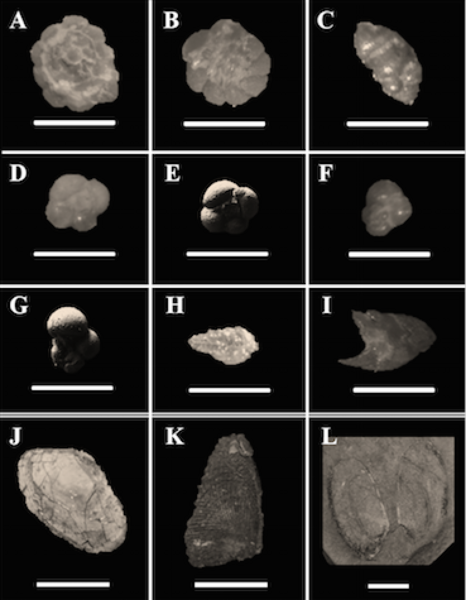
Foraminifera are a diverse phylum of marine protists that produce elaborate shells. Because of their abundance and morphological diversity, foraminiferal fossil assemblages are used for biostratigraphy, to accurately date sedimentary rocks and to characterize past ocean environments. In this paper, authors collected fossils within the Morozaki Group in central Honshu, Japan, to assess past marine environments and species diversity.

Read More...

Do Initial Strategies or Choice of Piece Color Lead to Advantages in Chess Games?

Ponnaluri et al. | Feb 07, 2017

Do Initial Strategies or Choice of Piece Color Lead to Advantages in Chess Games?

White pieces make the first move in chess games, and there are several opening strategies and consequent defense strategies that white and black pieces, respectively, can take . The author of this paper investigated whether taking a specific opening and defense strategy, as well as playing as white vs. black, can increase the chances of winning the game, by playing against various human and computer opponents.

Read More...

Redesigning an Experiment to Determine the Coefficient of Friction

Hu et al. | Jun 27, 2016

Redesigning an Experiment to Determine the Coefficient of Friction

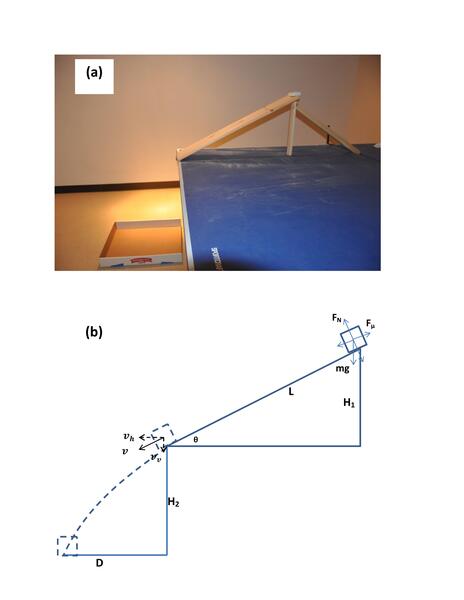
In a common high school experiment to measure friction coefficients, a weighted mass attached to a spring scale is dragged across a surface at a constant velocity. While the constant velocity is necessary for an accurate measurement, it can be difficult to maintain and this can lead to large errors. Here, the authors designed a new experiment to measure friction coefficients in the classroom using only static force and show that their method has a lower standard deviation than the traditional experiment.

Read More...

The Protective Effects of Panax notoginseng Saponin on the Blood-Brain Barrier via the Nrf2/ARE Pathway in bEnd3 Cells

Yang et al. | Apr 06, 2016

The Protective Effects of <i>Panax notoginseng</i> Saponin on the Blood-Brain Barrier via the Nrf2/ARE Pathway in bEnd3 Cells

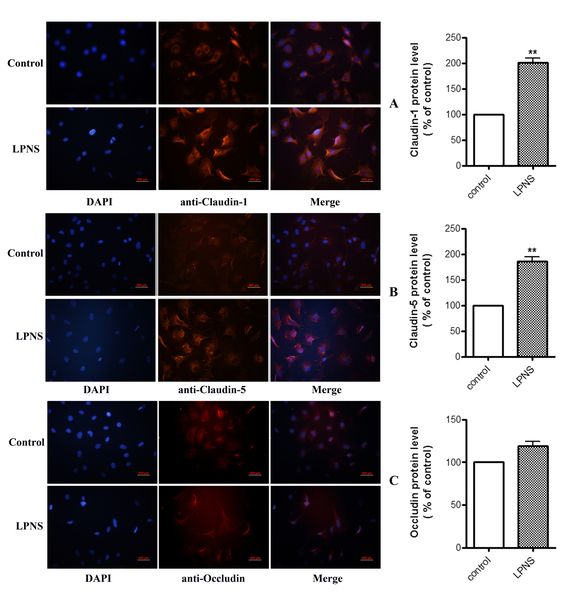
Disruption of the blood-brain barrier (BBB) is related to many neurological disorders, and can be caused by oxidative stress to cerebral microvascular endothelial cells (CMECs) composing the BBB. The authors of the paper investigated the protective effects of the total saponins in the leaves of Panax notoginseng (LPNS) on oxidative-stress-induced damage in a mouse cerebral microvascular endothelial cell line.

Read More...

Drosophila proteins as human surrogates for early drug discovery: Findings from detailed structural analysis

Shankar et al. | Oct 11, 2026

<i>Drosophila</i> proteins as human surrogates for early drug discovery: Findings from detailed structural analysis

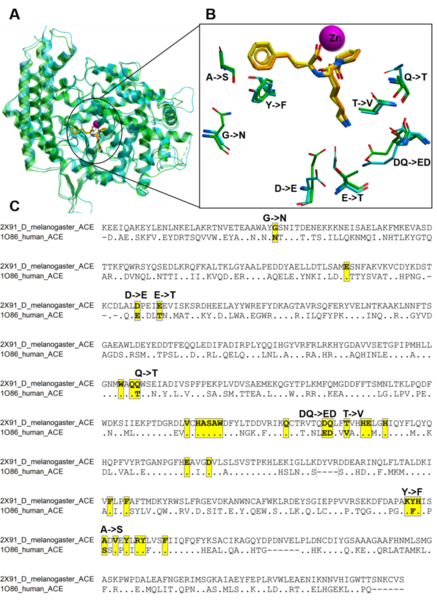
This study examines the possibility of utilizing proteins from Drosophila melanogaster in early drug discovery. Structural and sequence analysis of five diverse Drosophila proteins and its human homologs were conducted. Drosophila proteins with high conservation of amino acids at functionally significant positions are better candidates for use as human surrogate in drug discovery efforts.

Read More...

Understanding the impossibility of machine learning fairness with data examples

Pillutla et al. | Sep 04, 2026

Understanding the impossibility of machine learning fairness with data examples

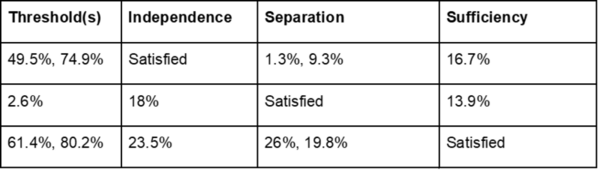
Machine learning systems are often expected to make fair decisions, yet the most widely used fairness criteria—independence, separation, and sufficiency—cannot generally be satisfied at the same time. In this study, students tested these criteria using a logistic regression model on a real-world student performance dataset and found that each criterion was met only at different prediction thresholds, with no threshold satisfying all three simultaneously. These results illustrate the inherent trade-offs in algorithmic fairness and highlight why achieving perfectly fair machine learning models is often impossible in practice.

Read More...