Browse Articles

Using machine learning to detect outliers of red clump stars

Meng et al. | Oct 10, 2026

Using machine learning to detect outliers of red clump stars

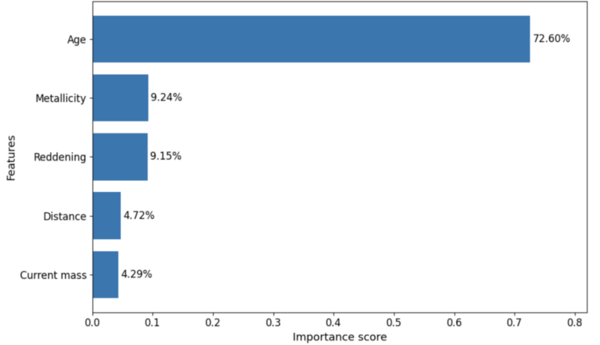
Machine learning offers a powerful way to analyze large astronomical datasets and identify stars with unusual properties. In this study, students used Extreme Gradient Boosting and Isolation Forest models to investigate why some red clump stars deviate from their expected luminosities. Their results show that stellar age plays a much stronger role than metallicity in driving luminosity variation, and the models successfully detected outlier stars that may affect distance measurements in galactic studies.

Read More...
Mitigation of ultraviolet solar radiation involving calcite

Nare et al. | Oct 10, 2026

Mitigation of ultraviolet solar radiation involving calcite

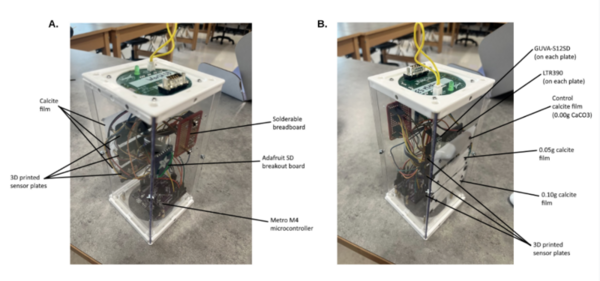
This study tested whether calcite, a safe and naturally occurring mineral, can block ultraviolet (UV) radiation when used in solar geoengineering. Students launched a high‑altitude balloon carrying UV sensors and calcite‑coated sheets to measure how much UV light passed through different calcite concentrations. Their results showed that calcite significantly reduces UV transmission, suggesting it may be a promising material for future stratospheric aerosol injection to help mitigate climate change.

Read More...

Determining the Hubble constant through the analysis of Abell clusters

Lee et al. | Sep 28, 2026

Determining the Hubble constant through the analysis of  Abell clusters
Image credit: NASA Hubble Space Telescope

Galaxy clusters offer several advantages for measuring H0 compared to traditional methods, such as Cepheid variables or Type Ia supernovae. Unlike individual stars or supernovae, clusters are less affected by local variations in stellar population or interstellar medium properties, providing a more stable and consistent measure over large cosmological distances. This work proposes using galaxy clusters as an alternative method for determining the H0. It provides an independent perspective on the H0 debate and contribute to ongoing efforts to reconcile the differing values obtained from the other two measurements.

Read More...

Multi-omic analysis identifies mitochondrial dysfunction as a key feature of hypertrophic cardiomyopathy

Velu et al. | Sep 26, 2026

Multi-omic analysis identifies mitochondrial dysfunction as a key feature of hypertrophic cardiomyopathy

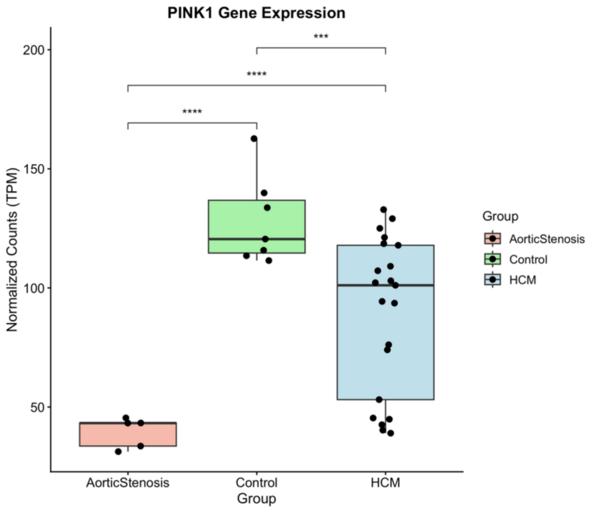
This study used multi-omic analysis to investigate gene expression and DNA methylation patterns associated with hypertrophic cardiomyopathy (HCM). The researchers found significant downregulation of mitochondrial and energy-related pathways, highlighting mitochondrial dysfunction—particularly altered PINK1 expression—as a potential contributor and therapeutic target in HCM.

Read More...

Fundamental understanding on the dynamic reactions of liquid gallium with aluminum

Li et al. | Sep 11, 2026

Fundamental understanding on the dynamic reactions of liquid gallium with aluminum
Image credit: David Hofmann

This study investigates the dynamic reaction between liquid gallium and aluminum, which poses a challenge when using high-performance gallium-rich thermal interface materials for electronic cooling. Through the usage of in-situ microscopy, we show that while aluminum oxide coatings slow gallium-induced damage, nanometer-thick iridium coatings effectively prevent reaction and surface degradation at device-operating temperatures. These findings highlight a promising thermal-cooling architecture for extending the lifespan and reliability of high-power electronic heat dissipation systems.

Read More...

Evaluating the impact of prompting styles on LLM accuracy for AIME math questions

Ganesa et al. | Jul 26, 2026

Evaluating the impact of prompting styles on LLM accuracy for AIME math questions

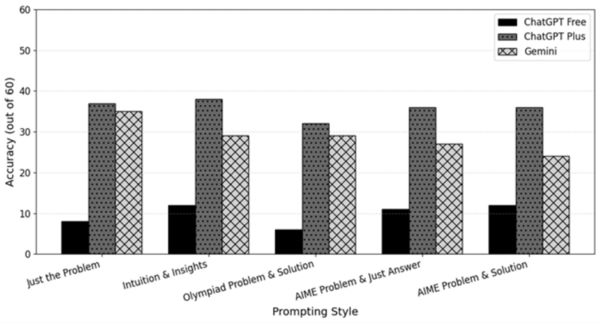
Large language models are increasingly used to solve math problems, but their ability to handle multi-step reasoning remains uncertain. In this study, students tested whether different prompting styles could improve LLM accuracy on challenging AIME math questions and found that detailed step-by-step solutions did not significantly outperform simpler prompts. These results suggest that improving LLM mathematical reasoning may require deeper model-level advances rather than changes in prompting style alone.

Read More...

Implications of various pure tones on Phaseolus vulgaris and Gaultheria shallon

Judit et al. | Jul 13, 2026

Implications of various pure tones on <i>Phaseolus vulgaris</i> and <i>Gaultheria shallon<i>

This study investigated how different sound frequencies (0, 1,000, 5,000, and 15,000 Hz) affect the growth of Phaseolus vulgaris and the transpiration rates of Gaultheria shallon. Although some differences in plant growth were observed, the authors found no consistent evidence that sound frequency enhanced overall growth or transpiration, highlighting the need for further research.

Read More...

Investigating the effects of glucose reintroduction on acutely starved HeLa cells

Puduru et al. | Jul 05, 2026

Investigating the effects of glucose reintroduction on acutely starved HeLa cells

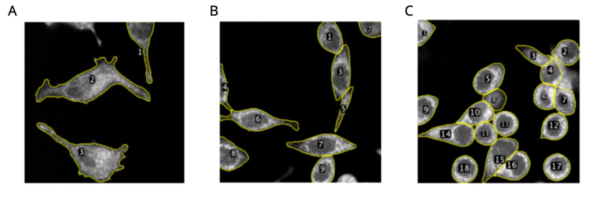
Cancer cells rely heavily on glycolysis, but how they respond when glucose is reintroduced after acute starvation is not well understood. Using fluorescence lifetime imaging microscopy, students tracked metabolic changes in HeLa cells and found a rapid shift toward glycolysis within 20 minutes of glucose reintroduction, followed by heterogeneous recovery toward oxidative phosphorylation. These results highlight metabolic flexibility and variability in cancer cells, offering insights relevant to treatment resistance and therapeutic design.

Read More...

Measuring the effect of early universe dark matter on the primordial values of helium-4 and deuterium

Pal et al. | Apr 29, 2026

Measuring the effect of early universe dark matter on the primordial values of helium-4 and deuterium

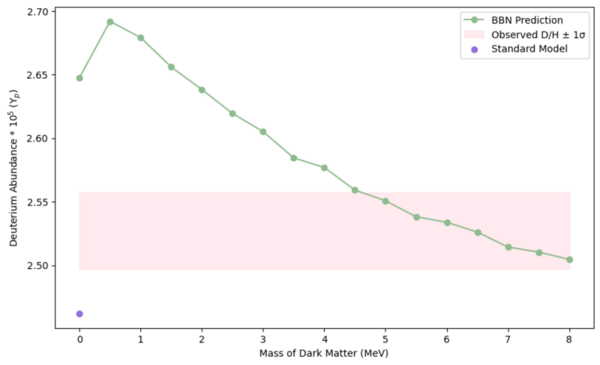
Recent observations by the “Extremely Metal-Poor Representatives Explored by the Subaru Survey” (EMPRESS) collaboration found normal deuterium levels but unexpectedly low helium-4, challenging current cosmological theories. This study used simulations with the PRyMordial package to test whether dark matter particles interacting with neutrinos in the early universe could explain the discrepancy.

Read More...