Browse Articles

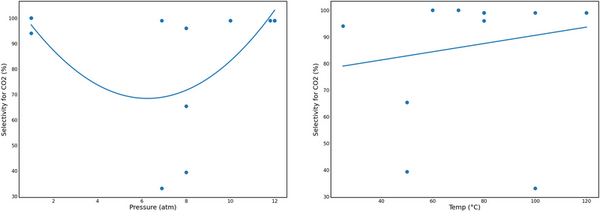
Pressure and temperature influence the efficacy of metal-organic frameworks for carbon capture and conversion

Lin et al. | May 07, 2023

Pressure and temperature influence the efficacy of metal-organic frameworks for carbon capture and conversion

Metal-organic frameworks (MOFs) are promising new nanomaterials for use in the fight against climate change that can efficiently capture and convert CO2 to other useful carbon products. This research used computational models to determine the reaction conditions under which MOFs can more efficiently capture and convert CO2. In a cost-efficient manner, this analysis tested the hypothesis that pressure and temperature affect the efficacy of carbon capture and conversion, and contribute to understanding the optimal conditions for MOF performance to improve the use of MOFs for controlling greenhouse CO2 emissions.

Read More...

Measuring the effect of early universe dark matter on the primordial values of helium-4 and deuterium

Pal et al. | Apr 29, 2026

Measuring the effect of early universe dark matter on the primordial values of helium-4 and deuterium

Recent observations by the “Extremely Metal-Poor Representatives Explored by the Subaru Survey” (EMPRESS) collaboration found normal deuterium levels but unexpectedly low helium-4, challenging current cosmological theories. This study used simulations with the PRyMordial package to test whether dark matter particles interacting with neutrinos in the early universe could explain the discrepancy.

Read More...

Homology modeling of clinically-relevant rilpivirine-resistant HIV-RT variants identifies novel rilpivirine analogs with retained binding affinity against NNRTI-resistant HIV mutations

Luk et al. | Jan 24, 2022

Homology modeling of clinically-relevant rilpivirine-resistant HIV-RT variants identifies novel rilpivirine analogs with retained binding affinity against NNRTI-resistant HIV mutations

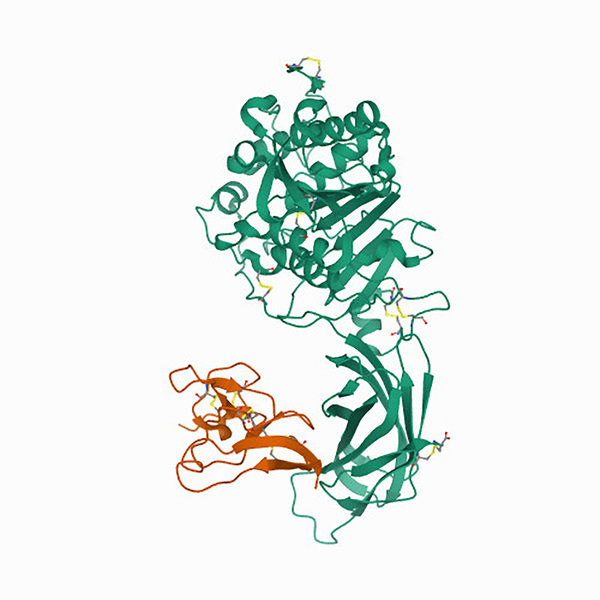
Human immunodeficiency virus (HIV), which affects tens of millions of individuals worldwide, can lead to acquired immunodeficiency syndrome (AIDS). While there is currently no cure for HIV, the development of small molecule antiretroviral agents has greatly improved the prognosis of infected individuals, especially in developed countries. Here, the authors employ homology modeling and molecular docking towards the identification of novel rilpivirine analogs that retain high binding affinity to clinically relevant rilpivirine-resistant mutations of the HIV reverse transcriptase enzyme.

Read More...

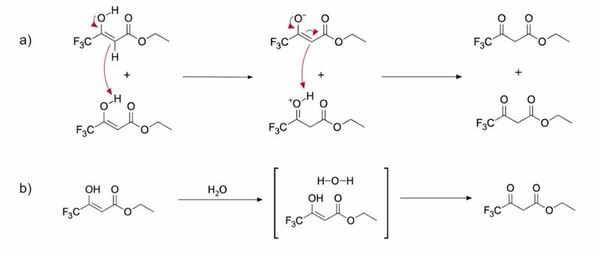
Modeling Hartree-Fock approximations of the Schrödinger Equation for multielectron atoms from Helium to Xenon using STO-nG basis sets

Gangal et al. | Oct 05, 2023

Modeling Hartree-Fock approximations of the Schrödinger Equation for multielectron atoms from Helium to Xenon using STO-nG basis sets

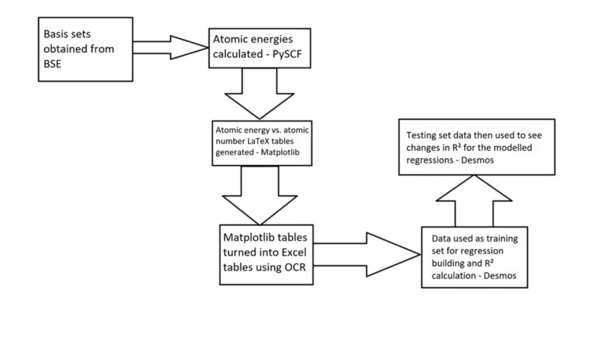
The energy of an atom is extremely useful in nuclear physics and reaction mechanism pathway determination but is challenging to compute. This work aimed to synthesize regression models for Pople Gaussian expansions of Slater-type Orbitals (STO-nG) atomic energy vs. atomic number scatter plots to allow for easy approximation of atomic energies without using computational chemistry methods. The data indicated that of the regressions, sinusoidal regressions most aptly modeled the scatter plots.

Read More...

Study of PINN sensor layout in evaluating WSS with application to patient-specific carotid flow

Nie et al. | Sep 04, 2026

Study of PINN sensor layout in evaluating WSS with application to patient-specific carotid flow

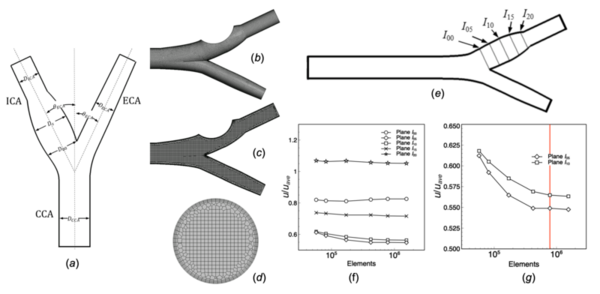
Physics‑Informed Neural Networks (PINNs) offer a promising way to estimate blood‑flow behavior in arteries, especially near the vessel wall where traditional methods struggle. In this study, students tested how sensor density and placement affect PINN accuracy in modeling carotid artery flow and found that accuracy improves up to a moderate sensor density and depends strongly on how close sensors are placed to the arterial wall. Applying the optimized configuration to a patient‑specific carotid model produced velocity predictions closely matching computational fluid dynamics results, highlighting PINNs’ potential for future personalized cardiovascular assessment.

Read More...

Hybrid Quantum-Classical Generative Adversarial Network for synthesizing chemically feasible molecules

Sikdar et al. | Jan 10, 2023

Hybrid Quantum-Classical Generative Adversarial Network for synthesizing chemically feasible molecules

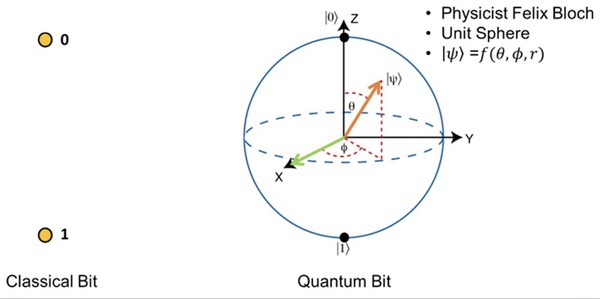
Current drug discovery processes can cost billions of dollars and usually take five to ten years. People have been researching and implementing various computational approaches to search for molecules and compounds from the chemical space, which can be on the order of 1060 molecules. One solution involves deep generative models, which are artificial intelligence models that learn from nonlinear data by modeling the probability distribution of chemical structures and creating similar data points from the trends it identifies. Aiming for faster runtime and greater robustness when analyzing high-dimensional data, we designed and implemented a Hybrid Quantum-Classical Generative Adversarial Network (QGAN) to synthesize molecules.

Read More...

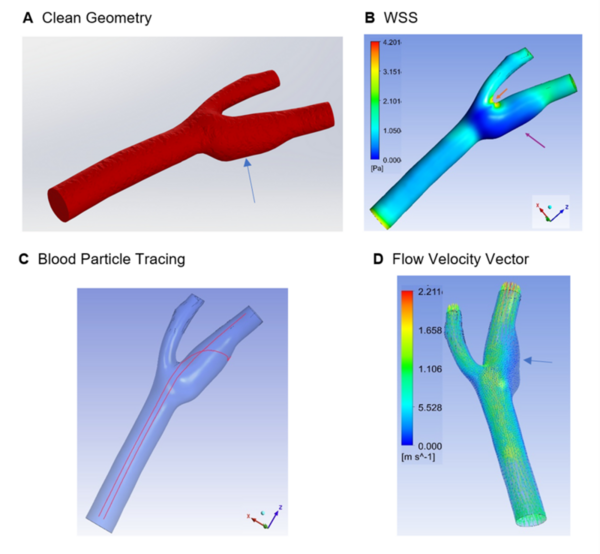
Enhanced brain arteries and aneurysms analysis using a CAE-CFD approach

Saravanan et al. | Mar 02, 2025

Enhanced brain arteries and aneurysms analysis using a CAE-CFD approach
Image credit: Vineet Saravanan

Here, recognizing that brain aneurysms pose a severe threat, often misdiagnosed and leading to high mortality, particularly in younger individuals, the authors explored a novel computer-aided engineering approach. They used magnetic resonance angiography images and computational fluid dynamics, to improve aneurysm detection and risk assessment, aiming for more personalized treatment.

Read More...

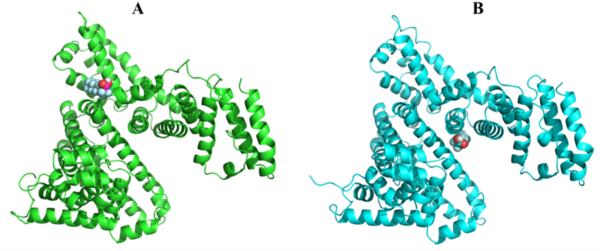
Exploring Interactions between PFAS (Per- and Polyfluoroalkyl Substances) and proteins

Lu-Yang et al. | May 16, 2026

Exploring Interactions between PFAS (Per- and Polyfluoroalkyl Substances) and proteins
Image credit: Authors

Here the authors investigated how the "forever chemical" perfluorooctanoic acid binds to bovine serum albumin (BSA) using computational software to simulate its potential impact on essential human plasma proteins. They identify a possible, high-energy binding configuration that could persistently impair protein functions, underscoring the critical need for further research into the long-term health risks of per- and poly-fluoroalkyl substances exposure.

Read More...