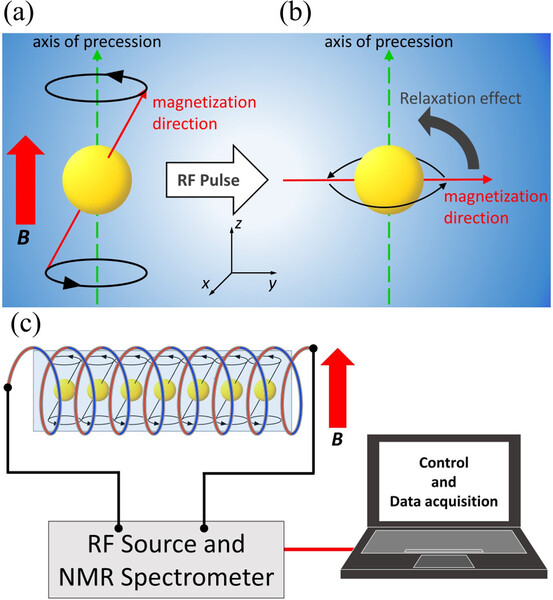
In this study, the authors explore contrast-enhanced magnetic resonance imaging at Earth's field.
Read More...Contrast-Enhanced Magnetic Resonance Imaging at Earth’s Magnetic Field Using Trace Gd3+ and Ho3+ Salts
In this study, the authors explore contrast-enhanced magnetic resonance imaging at Earth's field.
Read More...Utilizing a novel T1rho method to detect spinal degeneration via magnetic resonance imaging
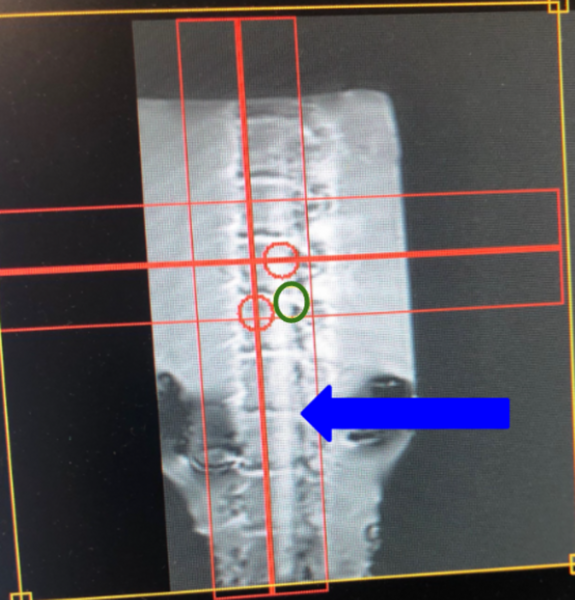
Spinal degeneration has been linked to critical conditions such as osteoarthritis in adults aged 40+; while this condition is considered to be irreversible, we took interest in magnetic resonance imaging (MRI) for early detection of the condition. Ultimately, our purpose was to determine the effectiveness of a relatively novel T1rho method in the early detection of spinal degeneration, and we hypothesized that the early to mild progression of spinal degeneration would affect T1rho values following an MRI scan.
Read More...A novel approach for early detection of Alzheimer’s disease using deep neural networks with magnetic resonance imaging
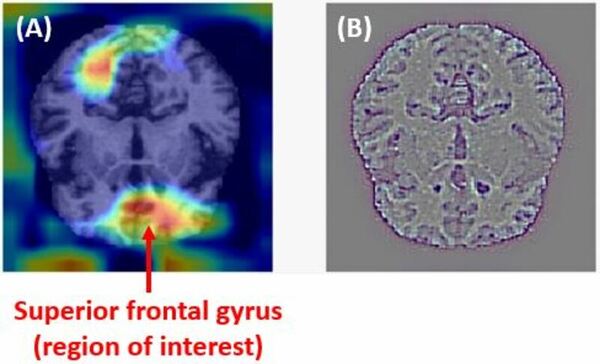
In the battle against Alzheimer's disease, early detection is critical to mitigating symptoms in patients. Here, the authors use a collection of MRI scans, layering with deep learning computer modeling, to investigate early stages of AD which can be hard to catch by human eye. Their model is successful, able to outperform previous models, and detected regions of interest in the brain for further consideration.
Read More...Starts and Stops of Rhythmic and Discrete Movements: Modulation in the Excitability of the Corticomotor Tract During Transition to a Different Type of Movement
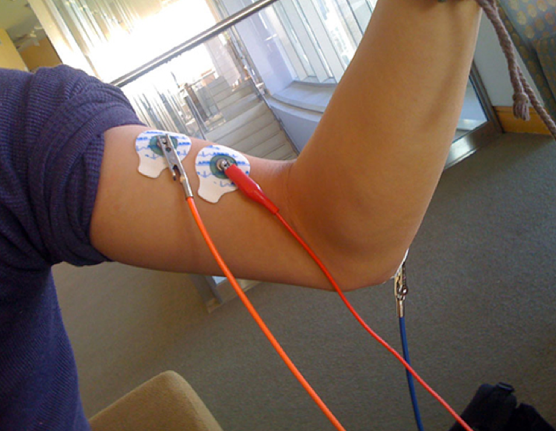
Control of voluntary and involuntary movements is one of the most important aspects of human neurological function, but the mechanisms of motor control are not completely understood. In this study, the authors use transcranial magnetic stimulation (TMS) to stimulate a portion of the motor cortex while subjects performed either discrete (e.g. throwing) or rhythmic (e.g. walking) movements. By recording electrical activity in the muscles during this process, the authors showed that motor evoked potentials (MEPs) measured in the muscles during TMS stimulation are larger in amplitude for discrete movements than for rhythmic movements. Interestingly, they also found that MEPs during transitions between rhythmic and discrete movements were nearly identical and larger in amplitude than those recorded during either rhythmic or discrete movements. This research provides important insights into the mechanisms of neurological control of movement and will serve as the foundation for future studies to learn more about temporal variability in neural activity during different movement types.
Read More...Evaluating the clinical applicability of neural networks for meningioma tumor segmentation on 3D MRI
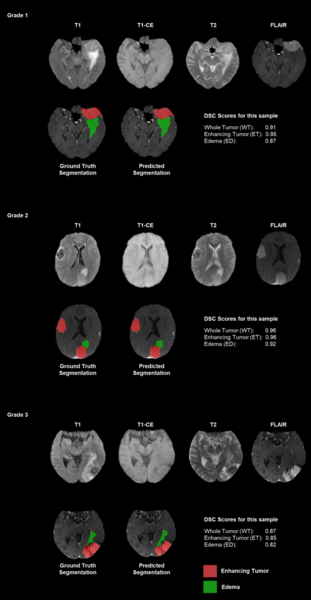
Authors emphasize the challenges of manual tumor segmentation and the potential of deep learning models to enhance accuracy by automatically analyzing MRI scans.
Read More...Impact of gadodiamide (Omniscan) on a beef liver catalase ex vivo model

Here, seeking to better understand the effects of gadolinium-based contrast agents, dyes typically used for MRI scans, the authors evaluated the activity of catalase found in beef liver both with and without gadodiamide when exposed to hydrogen peroxide. They found that gadioamide did not significantly inhibit catalase's activity, attributing this lack of effects to the chelating agent found in gadodiamide.
Read More...Advancements in glioma segmentation: comparing the U-Net and DeconvNet models
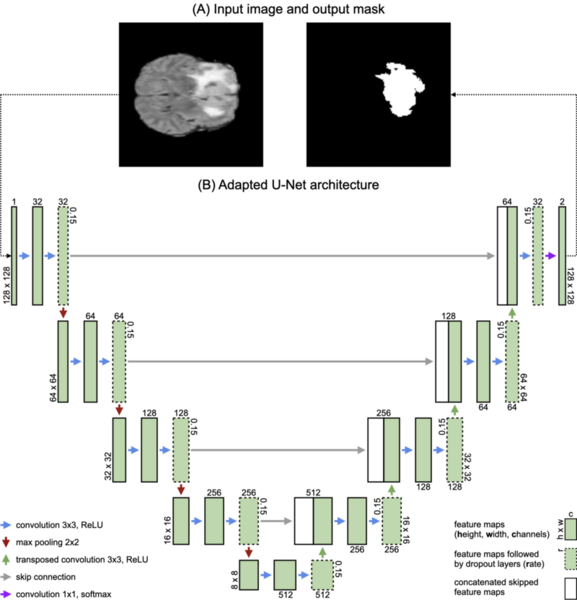
This study compares the performance of two deep learning models, U-Net and DeconvNet, for segmenting gliomas from MRI scans.
Read More...A comparative analysis of machine learning approaches to predict brain tumors using MRI
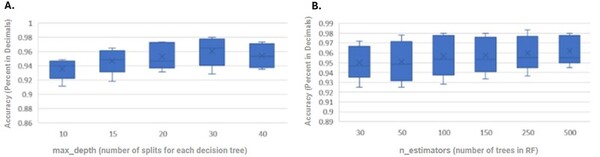
The authors use machine learning on MRI images of brain tissue to predict tumor onset as an avenue for early detection of brain cancer.
Read More...Study of PINN sensor layout in evaluating WSS with application to patient-specific carotid flow
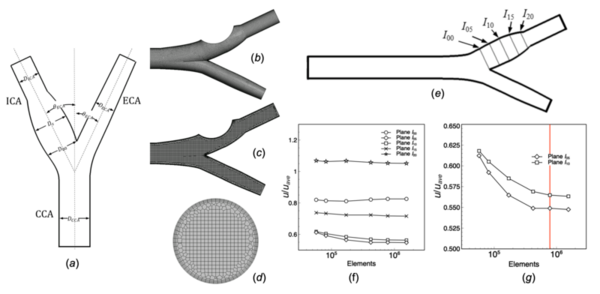
Physics‑Informed Neural Networks (PINNs) offer a promising way to estimate blood‑flow behavior in arteries, especially near the vessel wall where traditional methods struggle. In this study, students tested how sensor density and placement affect PINN accuracy in modeling carotid artery flow and found that accuracy improves up to a moderate sensor density and depends strongly on how close sensors are placed to the arterial wall. Applying the optimized configuration to a patient‑specific carotid model produced velocity predictions closely matching computational fluid dynamics results, highlighting PINNs’ potential for future personalized cardiovascular assessment.
Read More...Large-scale brain network connectivity under anxiety induced by naturalistic story listening
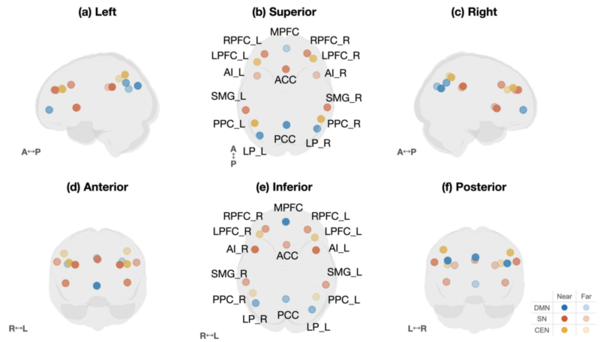
This study found that anxiety induced by a suspenseful story increased communication between the brain’s salience, default mode, and central executive networks, with the central executive network acting as a bridge during peak tension. These findings suggest that anxiety alters large-scale brain connectivity patterns and may help inform future diagnostic tools and personalized treatments for anxiety disorders.
Read More...