Browse Articles

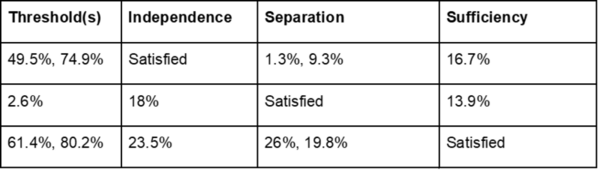
Understanding the impossibility of machine learning fairness with data examples

Pillutla et al. | Sep 04, 2026

Understanding the impossibility of machine learning fairness with data examples

Machine learning systems are often expected to make fair decisions, yet the most widely used fairness criteria—independence, separation, and sufficiency—cannot generally be satisfied at the same time. In this study, students tested these criteria using a logistic regression model on a real-world student performance dataset and found that each criterion was met only at different prediction thresholds, with no threshold satisfying all three simultaneously. These results illustrate the inherent trade-offs in algorithmic fairness and highlight why achieving perfectly fair machine learning models is often impossible in practice.

Read More...
Determining the Hubble constant through the analysis of Abell clusters

Lee et al. | Sep 28, 2026

Determining the Hubble constant through the analysis of  Abell clusters
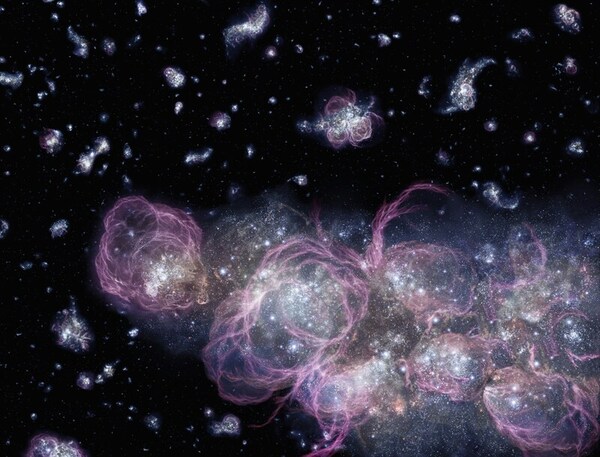
Image credit: NASA Hubble Space Telescope

Galaxy clusters offer several advantages for measuring H0 compared to traditional methods, such as Cepheid variables or Type Ia supernovae. Unlike individual stars or supernovae, clusters are less affected by local variations in stellar population or interstellar medium properties, providing a more stable and consistent measure over large cosmological distances. This work proposes using galaxy clusters as an alternative method for determining the H0. It provides an independent perspective on the H0 debate and contribute to ongoing efforts to reconcile the differing values obtained from the other two measurements.

Read More...