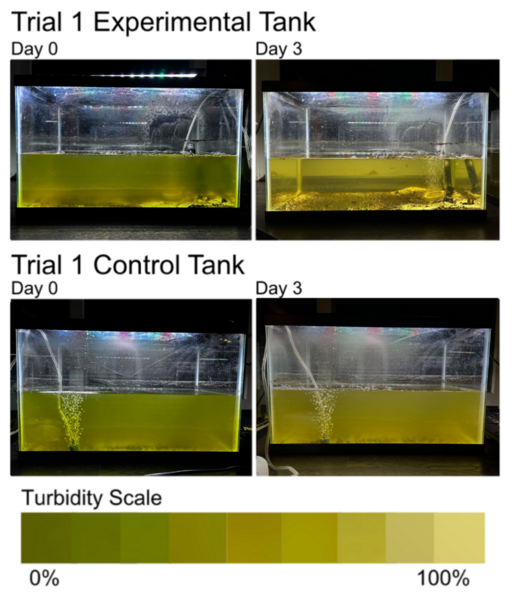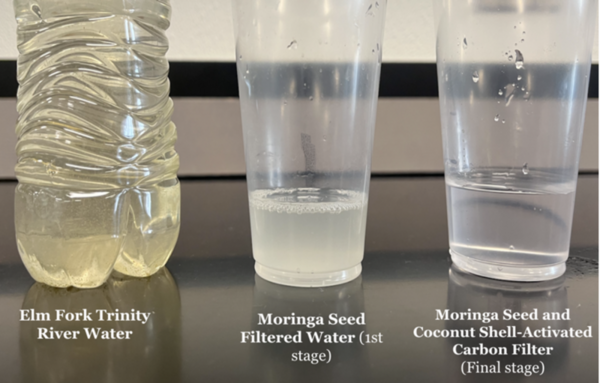
One-third of the world's people do not have access to clean drinking water. Nadella and Nadella tackle this issue by testing a low-cost filtration system for removing heavy metal and bacteria from water.
Read More...Heavy metal and bacterial water filtration using Moringa oleifera and coconut shell-activated carbon
One-third of the world's people do not have access to clean drinking water. Nadella and Nadella tackle this issue by testing a low-cost filtration system for removing heavy metal and bacteria from water.
Read More...A Study on the Coagulating Properties of the M. oleifera Seed
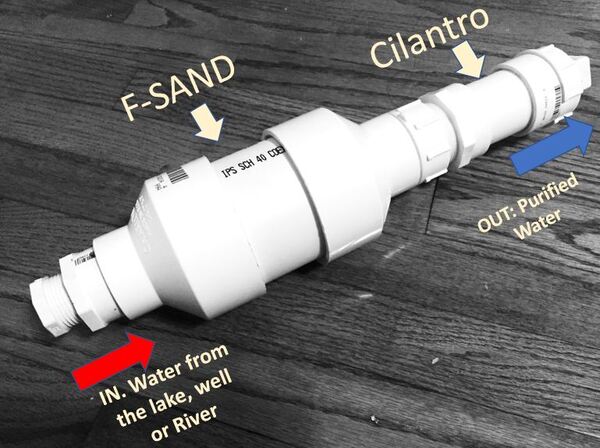
In this study, the authors investigate whether Moringa Oleifera seeds can serve as material to aid in purifying water. M. oleifera seeds have coagulating properties and the authors hypothesized that including it in a water filtration system would reduce particles, specifically bacteria, in water. Their results show that this system removed the largest percent of bacteria. When used in combination with cilantro, it was actually more efficient than the other techniques! These findings have important implications for creating better and more economical water purification systems.
Read More...Bacterial Load Consistency Among Three Independent Water Distribution Systems
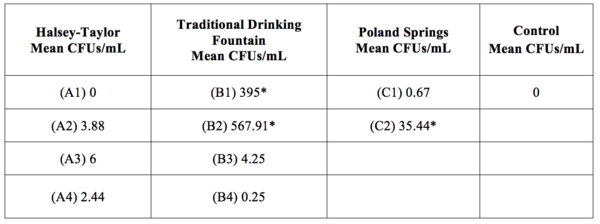
Clean drinking water is an essential component to maintaining public health. The authors of this study tested the bacterial load of water from three different disinfection and filtration systems in order to determine which system might be superior.
Read More...Comparison of shower filters for reducing total residual chlorine under household flow conditions
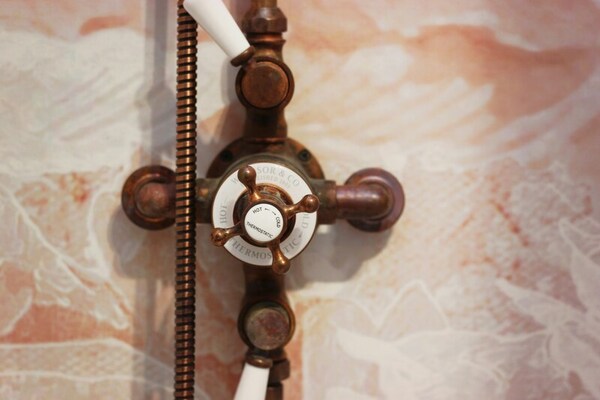
This study compared two commercial shower filters and three individual filtration media to evaluate their ability to reduce total residual chlorine under household flow conditions. By identifying which materials most effectively reduce chlorine during regular shower use, this research provides practical information for consumers and offers guidance for designing more affordable and reusable shower filtration systems.
Read More...A novel filtration model for microplastics using natural oils and its application to the environment
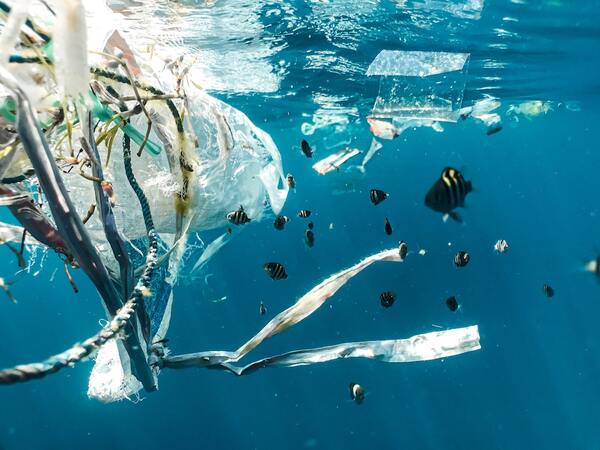
Recognizing the need for a method to filter microplastics from polluted water the authors sought to use nonpolar solvents, palm oil and palm kernel oil, to filter microplastics out of model seawater. By relying on the separation of polar and nonpolar solvents followed by freezing the nonpolar solvent, they reported that microplastics could be extracted with percentages ranging from 96.2% to 94.2%. They also provided an estimation to use this method as part of container ships to clean the Pacific Ocean of microplastics.
Read More...Evaluating the filtration efficiency and water quality impact of Corbicula javanicus
Efficacy of electrolytic treatment on degrading microplastics in tap water
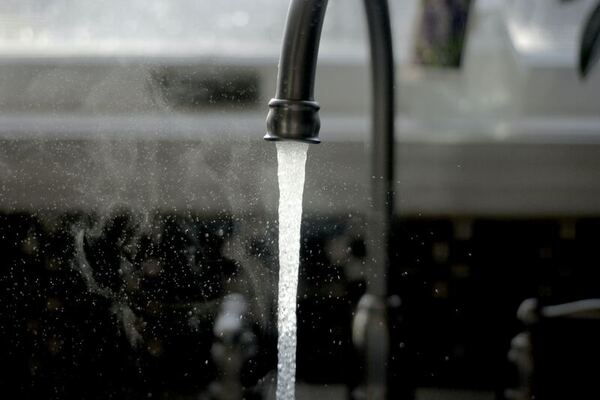
Here seeking to identify a method to remove harmful microplastics from water, the authors investigated the viability of using electrolysis to degrade microplastics in tap water. Compared to control samples, they found electrolysis treatment to significantly the number of net microplastics, suggesting that this treatment could potentially implemented into homes or drinking water treatment facilities.
Read More...Enhanced Iron and Manganese Removal Using Nanocomposite CA/PVP Membranes Doped with CNC, CNF, and HNT
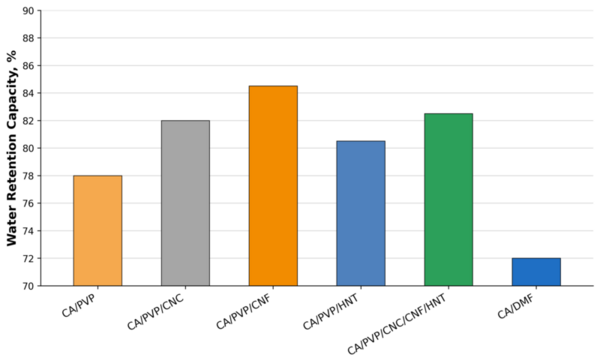
We developed new eco-friendly membranes enriched with natural nanomaterials to clean iron and manganese from drinking water. Some nanocomposite membranes achieved over 95% metal removal while maintaining water flux, suggesting improved performance compared to the undoped control group.
Read More...Novel environmentally friendly approach to wastewater treatment eliminates aluminum sulfate and chlorination
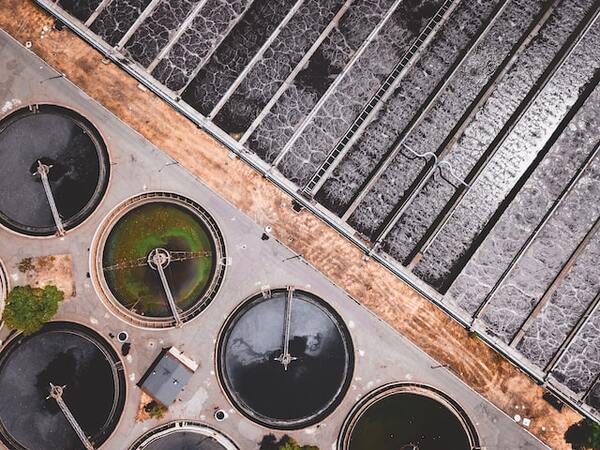
The authors tested environmentally-friendly alternatives to wastewater treatment chemicals, including activated charcoal for filtration and citrus peels for preventing bacterial growth.
Read More...Water tubing injury patterns among different demographics: A NEISS study

The authors looked at how injuries sustained during water tubing, that require treatment at an emergency department, differ between males and females.
Read More...