Browse Articles

Luteolin's positive inhibition of melanoma cell lines.

Su et al. | Nov 17, 2020

Luteolin's positive inhibition of melanoma cell lines.

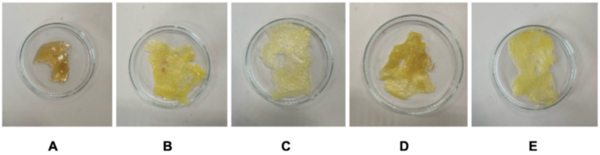
Luteolin (3′,4′,5,7-tetrahydroxyflavone) is a flavonoid that occurs in fruits, vegetables, and herbs. Research suggests that luteolin is effective against various forms of cancer by triggering apoptosis pathways. This experiment analyzes the effects of luteolin on the cell viability of malignant melanoma cells using an in vitro experiment to research alternative melanoma treatments and hopefully to help further cancer research as a whole.

Read More...
Comparing Suturing And Stapling In Coronary Bypass Grafting Anastomosis

Levy et al. | Oct 13, 2014

Comparing Suturing And Stapling In Coronary Bypass Grafting Anastomosis

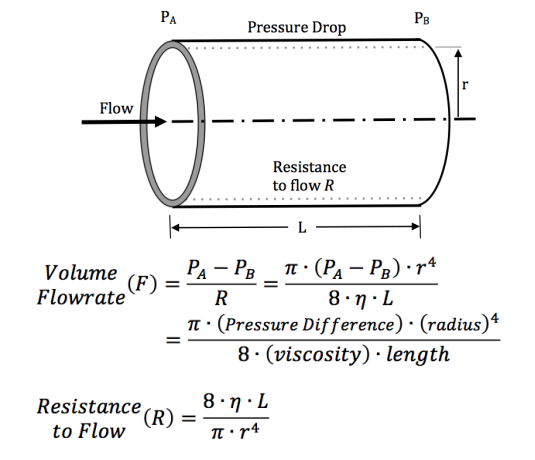
Coronary artery bypass grafts are a common technique to treat coronary heart disease. The authors compared the efficacy of suturing and stapling techniques using an artificial heart pump and silicone tubing and found that suturing, while more time and skill intensive, held pressure in the tubing better than stapling.

Read More...

Investigating the effects of PVC microplastics on the growth of Chlorella vulgaris

Beaubien et al. | Oct 13, 2026

Investigating the effects of PVC microplastics on the growth of <i>Chlorella vulgaris</i>

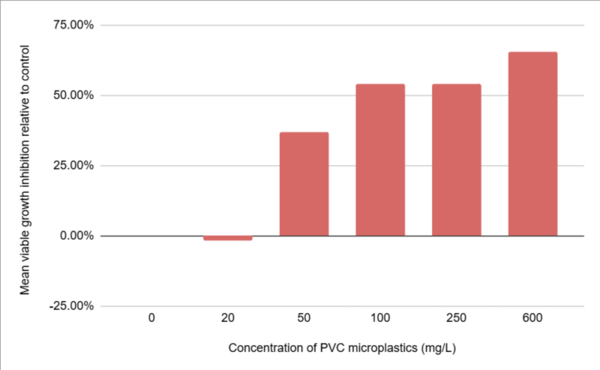
This study examined the effect of varying PVC microplastic concentrations on the growth of Chlorella vulgaris in freshwater, utilizing six PVC levels and identical culture conditions. Cell counts revealed that higher PVC concentrations consistently reduced algal growth, and a Spearman correlation test detected a significant negative monotonic association between PVC concentration and viable cell density. These results support the hypothesis that PVC microplastics impair algal growth, underscoring their ecological risk in freshwater environments.

Read More...

Evaluating the impact of prompting styles on LLM accuracy for AIME math questions

Ganesa et al. | Jul 26, 2026

Evaluating the impact of prompting styles on LLM accuracy for AIME math questions

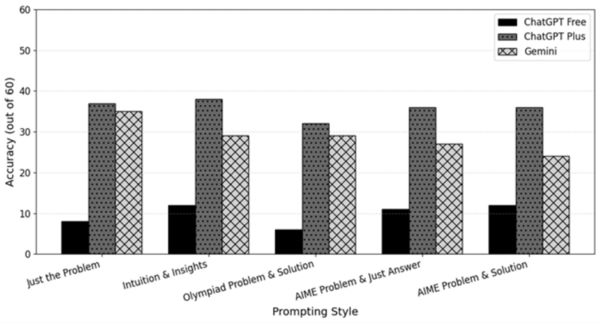
Large language models are increasingly used to solve math problems, but their ability to handle multi-step reasoning remains uncertain. In this study, students tested whether different prompting styles could improve LLM accuracy on challenging AIME math questions and found that detailed step-by-step solutions did not significantly outperform simpler prompts. These results suggest that improving LLM mathematical reasoning may require deeper model-level advances rather than changes in prompting style alone.

Read More...

Investigating the functionality of an Eco-Cooler made of plastic bottles

Tong et al. | Jul 22, 2026

Investigating the functionality of an Eco-Cooler made of plastic bottles
Image credit: Tong, Tong, and Migenes

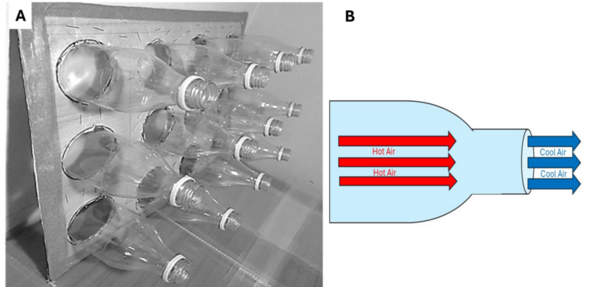
In the study, the authors looked at an environmentally friendly alternative to A/C systems/cooling. They wanted to test the effectiveness of this cooling system called the Eco-Cooler as well as see if they could improve it. They found that the Eco-Cooler had minimal cooling, while their altered Eco-Cooler system had some cooling. This results shows the use of water helps cool the environment a lot more.

Read More...

Simulating single versus cocktail antibiotic effects on the human gut microbiome

Patel et al. | Jul 19, 2026

Simulating single versus cocktail antibiotic effects on the human gut microbiome
Image credit: Volodymyr Hryshchenko

This study, uses SimulATe to model changes in microbial diversity and community structure upon administering a cocktail of antibiotics versus a single antibiotic. The authors hypothesized that antibiotic cocktails, particularly those combining broad-spectrum drugs like tetracyclines and trimethoprims, would cause a more significant reduction in gut microbial diversity compared to single-drug treatments. The findings confirmed a greater loss of microbial diversity with combinatorial treatments compared to single-drug treatments. While individual antibiotics dynamically reshaped the surviving species of the microbiome, antibiotic cocktails frequently cleared all species of the gut microbiome.

Read More...

Optimizing AI image detection using a Convolutional Neural Network model with Fast Fourier Transform

Gupta et al. | Oct 24, 2025

Optimizing AI image detection using a Convolutional Neural Network model with Fast Fourier Transform

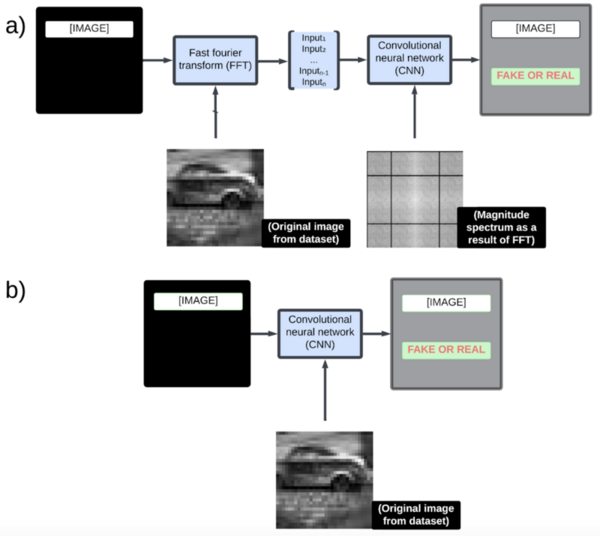
Recent advances in generative AI have made it increasingly hard to distinguish real images from AI-generated ones. Traditional detection models using CNNs or U-net architectures lack precision because they overlook key spatial and frequency domain details. This study introduced a hybrid model combining Convolutional Neural Networks (CNN) with Fast Fourier Transform (FFT) to better capture subtle edge and texture patterns.

Read More...